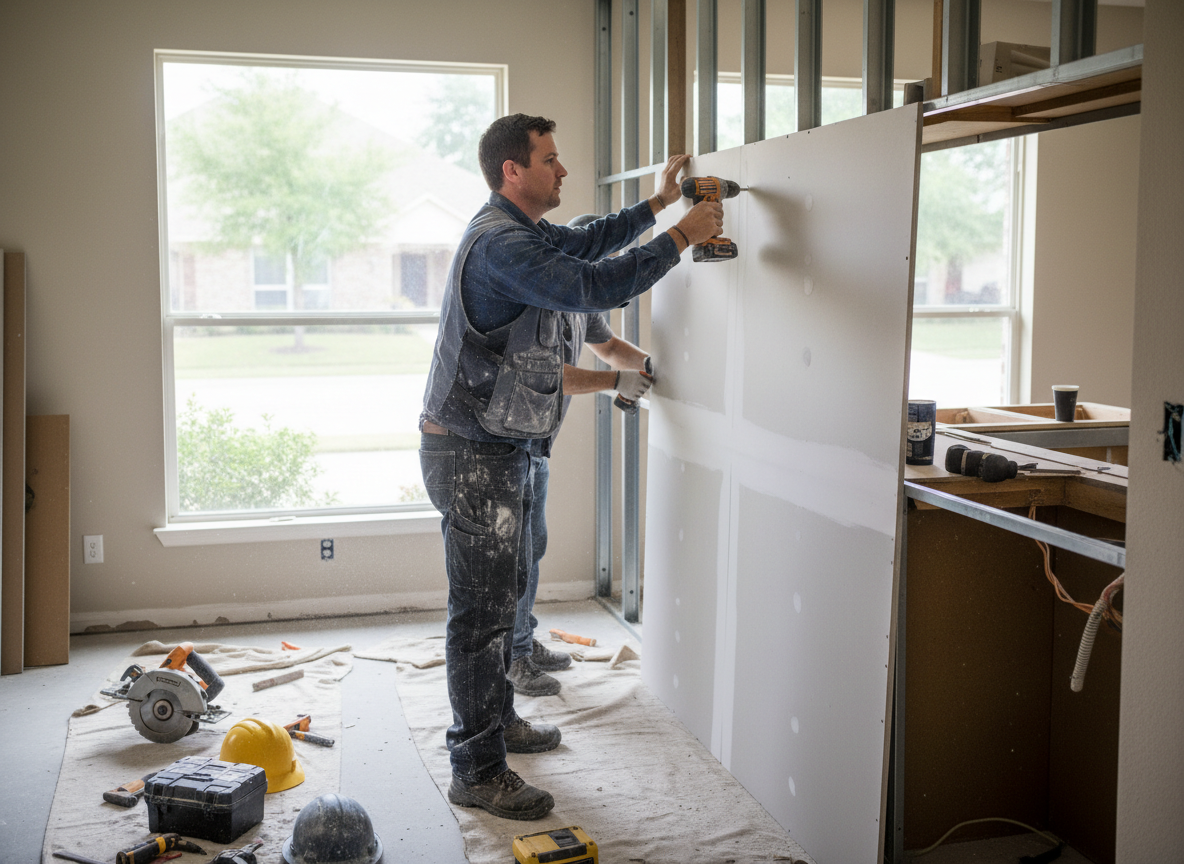
Murphy homes in neighborhoods like Breeze Hill and The Pavilions often feature 1990s to early 2000s construction with standard wood framing and vinyl siding that can shift during the region's occasional severe storms. Remodeling work here requires checking for moisture intrusion before opening walls, especially when adding bathrooms or kitchens where humidity from hot summers accelerates mold risks in attics and crawl spaces. Local codes in Collin County call for updated electrical and plumbing permits on any structural changes, and crews must account for the mild winters that still bring freeze-thaw cycles affecting exterior door and window installations.
Projects in Rolling Ridge frequently involve updating older HVAC integration and insulation when expanding living spaces, since the original builds were not designed for today's higher summer loads. Contractors must verify soil stability around foundations before adding room extensions, as clay-heavy ground in parts of Murphy expands and contracts with rainfall. Working near Breckinridge Park or Murphy Central Park also means coordinating with city setback rules that limit how close new additions can sit to property lines.
Homeowners in nearby Plano, Richardson and Wylie often request open-concept kitchen and living area remodels that tie into existing truss systems. TalvoraWorks evaluates load-bearing walls carefully because many Murphy residences use truss roofs that limit ceiling height changes. Material selection focuses on humidity-rated drywall and sealed flooring to handle the area's summer moisture without warping.
Technician insight
In Murphy, the thing that catches most people out with home remodeling contractor work is underestimating how humid summers affect drywall and flooring choices in homes built before 2005 around Rolling Ridge. Many owners skip checking for prior storm water intrusion near the roofline, which then turns a simple kitchen update into a full wall replacement once we open the space.
Breeze Hill Addition
Homeowner wanted to enlarge a family room in a 1998 Breeze Hill house. We found water damage along the south wall from a prior storm. Replaced affected framing and insulation, added proper vapor barrier, then completed the addition with humidity-rated materials. Project finished on schedule with county sign-off.
How it works
- 1
Initial Site Visit
Walk through the Murphy home to assess current layout, identify load-bearing elements and note any storm-related wear on siding or roofing.
- 2
Scope and Permit Planning
Prepare drawings and pull required Collin County permits for structural or electrical work before ordering materials.
- 3
Demolition and Rough-In
Remove outdated finishes, update wiring and plumbing to current codes, and address any moisture issues found in walls or floors.
- 4
Finishing and Final Inspection
Install new cabinetry, flooring and fixtures rated for local humidity, then schedule county inspection and walkthrough.
Pricing
Upfront written quotes provided after site visit; final cost depends on scope, material selections and any hidden structural repairs uncovered during demolition.